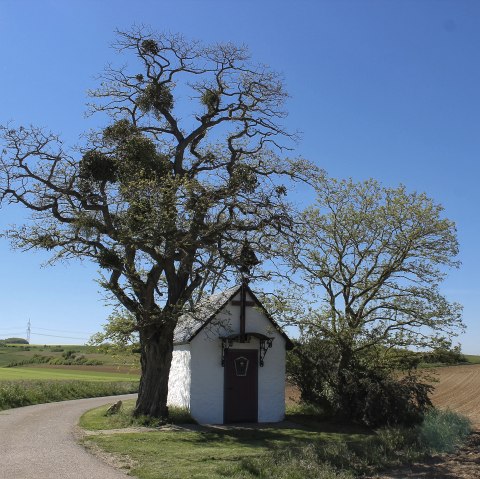

stratmann-web-0112, © Dennis Stratmann | Kreis Düren
  • Duration: 3:55 h
  • Difficulty: easy

Tälerroute Neffelbach

Heimbach

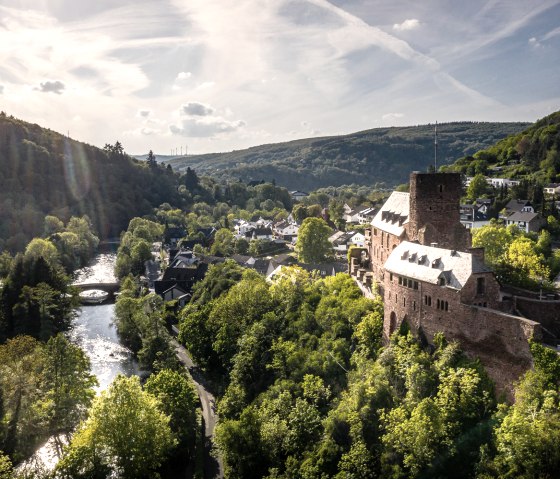
We recommend starting in the tranquil town of Heimbach and heading towards Kerpen-Sindorf from here. Once you have left the highest point between the smallest town in NRW and the district of Vlatten behind you, the route is almost all downhill. Both the starting point and the destination in Kerpen-Sindorf have rail connections, making it easy to cycle the route in conjunction with public transport and eliminating the need to shuttle by car. Along the way, numerous castles and palaces, the Zülpich Seepark (detour), tranquil villages and small towns as well as cozy spots along the Neffelbach and in the Erftauen invite you to rest and linger.

mehr lesen

Marking of the tour:

  • Logo_Neffelbachroute
gpx: t803794444_taelerroute- neffelbach

Share content:

Along the route

Bitte akzeptieren Sie den Einsatz aller Cookies, um den Inhalt dieser Seite sehen zu können.

Alle Cookies Freigeben

More information about this route

Duration: 3:55 h

Difficulty: easy

Tour-type: Cycling

Features:

  • Family-friendly

The circular route in the outdooractive tour planner.

The Neffelbach valley route is marked with its own tour logo.

Cycle map: Cycle network in the Düren district with junction system, scale 1:40,000, Kompass Verlag. Available free of charge from local tourist information offices or from Rureifel Tourismus e.V.

Rureifel Tourismus e.V.

An der Laag 4
52396 Heimbach
Phone: 0049 2446 805790

write e-mail

Plan your journey

per Google Maps

Ähnliche Touren:

photo smuggling trail

Schmugglerweg [60]

The road takes its name from the post-war period, when coffee smuggling from Belgium was one of the most important sources of income for the people of Schmidt. Schmidt was over 90% destroyed at the end of the Second World War, including the parish church of St. Hubertus. With the profits from smuggling coffee across the nearby border, the people of Schmidt got their families through and rebuilt their destroyed houses. Of course, this did not go unnoticed by the parish priest at the time, Josef Beyer. The reconstruction of the church initially progressed somewhat less quickly. He said in a sermon: "I know that you are getting a headache from all the money. For me it's the other way around, because I don't know where I'm going to get the money to rebuild the church." From now on, the smugglers sacrificed part of their profits from the coffee business to rebuild the church. church. This is why it is popularly known as St. Mokka.

Three oaks" viewpoint

Weheschlucht [46]

The deeply carved valley of the Weiße Wehe gives this hiking trail its name. The starting point is the "Zum Alten Forsthaus" hotel in Vossenack. The Wehebach originates from the confluence of the "Roter Wehe" and "Weißer Wehe" rivers. In 1981, six Polish beavers were settled in the Weiße Wehe valley. Until the 19th century, the rodents were hunted for their fur, declared fish by the Pope, eaten during Lent and used as an aphrodisiac. The consequence was their almost complete extinction. Today, the Eifel population is once again estimated at 200 to 250 animals. Guided hikes follow the tracks of the beaver. We follow hiking trail no. 46 .