
IMG_7710, © Rureifel-Tourismus e.V., Dennis Winands
  • Distance: 10 km
  • Duration: 2:42 h
  • Difficulty: medium

Berg mit Weitsicht [97]

Nideggen

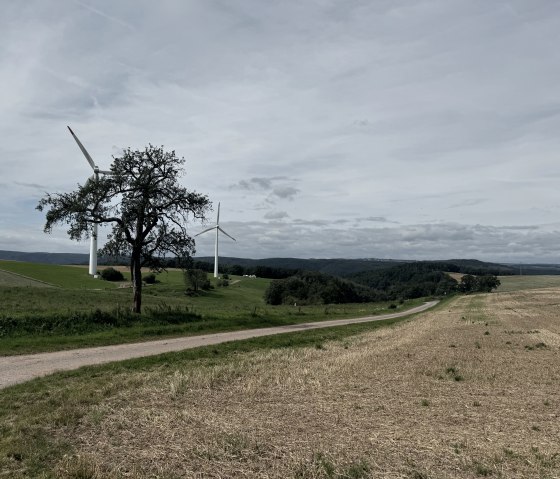
The Nideggen village of Berg invites you to take a 10.1 km loop over the heights and small stream valleys. Start at the parking lot at the Berg sports field.
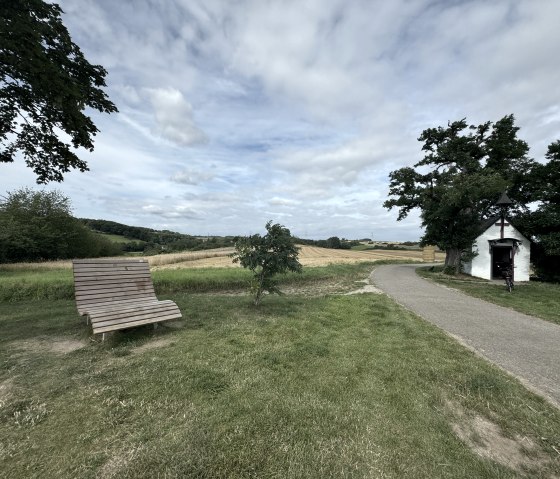
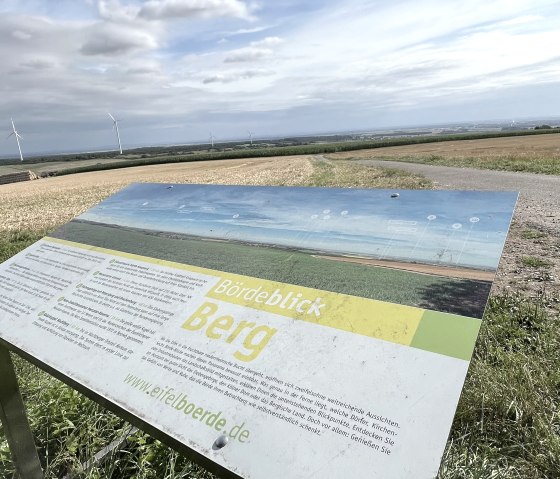
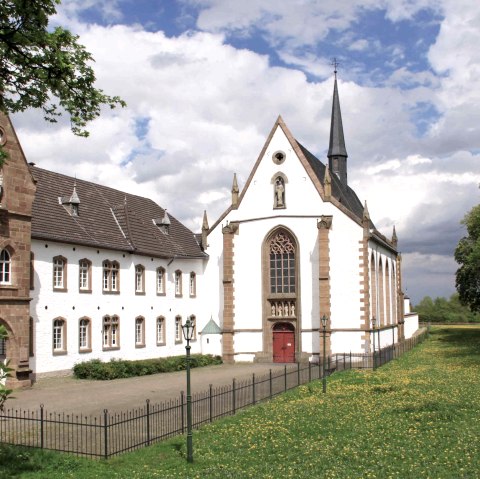
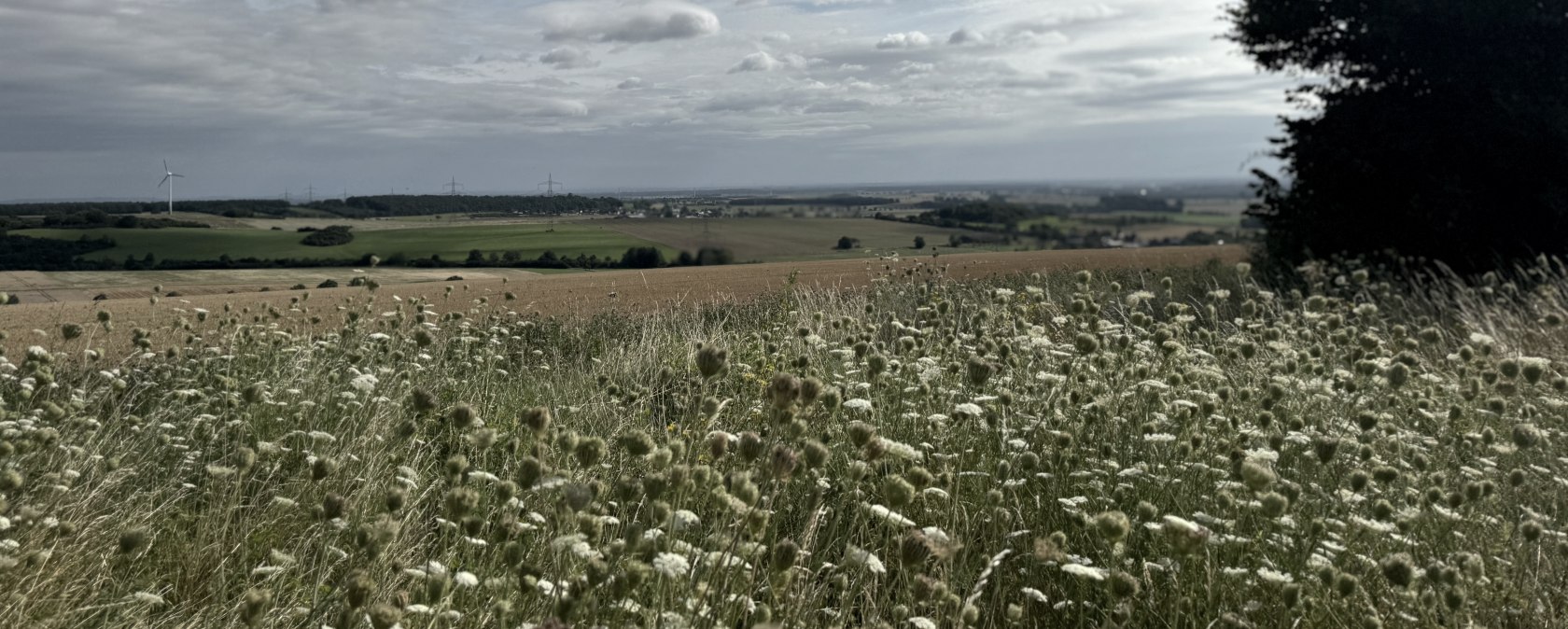
First you reach the Bördeblick "Zum Breidel" with a magnificent view over Zülpich into the Rhine Valley as far as the Siebengebirge mountains, if the air is clear enough. The small village of Muldenau lies on your left along the ridge until you reach the Galgenberg and the beautiful Antonius Chapel. The route takes you slightly downhill into the Neffelbach valley along the Gödersheimer Mühle mill and back up to the edge of the village of Berg. You can shorten the route here, but you will miss the Klemensstock with its views of the Rhine and Rur valleys.
Then it's back to the beautiful village of Berg with its far-reaching views.

mehr lesen

Marking of the tour:

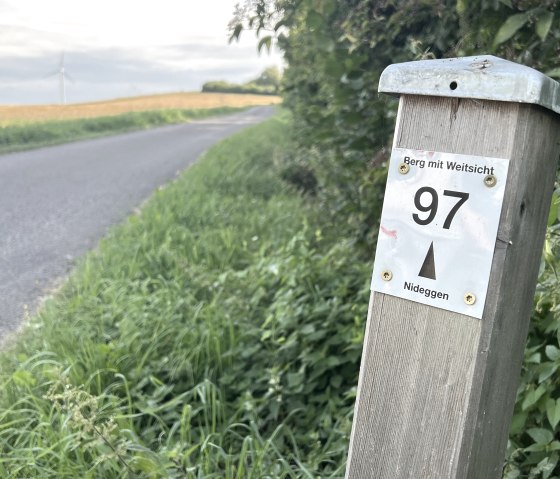
  • Waymarking mountain with a view [97]
gpx: Mountain with foresight [97]pdf: Mountain with foresight [97]

Share content:

Along the route

Bitte akzeptieren Sie den Einsatz aller Cookies, um den Inhalt dieser Seite sehen zu können.

Alle Cookies Freigeben

More information about this route

Distance: 10 km

Duration: 2:42 h

Difficulty: medium

Tour-type: Hiking

Ascent: 140 m

Descent: 140 m

Features:

  • Round trip

Accessibility by public transport

  • Accessible by bus line 211: Bus stop Berg Frankenstraße

You can find the timetable for bus route 211 here.

Rureifel Tourismus GmbH

52396 Heimbach

Plan your journey

per Google Maps

Ähnliche Touren:

photo smuggling trail

Schmugglerweg [60]

The road takes its name from the post-war period, when coffee smuggling from Belgium was one of the most important sources of income for the people of Schmidt. Schmidt was over 90% destroyed at the end of the Second World War, including the parish church of St. Hubertus. With the profits from smuggling coffee across the nearby border, the people of Schmidt got their families through and rebuilt their destroyed houses. Of course, this did not go unnoticed by the parish priest at the time, Josef Beyer. The reconstruction of the church initially progressed somewhat less quickly. He said in a sermon: "I know that you are getting a headache from all the money. For me it's the other way around, because I don't know where I'm going to get the money to rebuild the church." From now on, the smugglers sacrificed part of their profits from the coffee business to rebuild the church. church. This is why it is popularly known as St. Mokka.

Three oaks" viewpoint

Weheschlucht [46]

The deeply carved valley of the Weiße Wehe gives this hiking trail its name. The starting point is the "Zum Alten Forsthaus" hotel in Vossenack. The Wehebach originates from the confluence of the "Roter Wehe" and "Weißer Wehe" rivers. In 1981, six Polish beavers were settled in the Weiße Wehe valley. Until the 19th century, the rodents were hunted for their fur, declared fish by the Pope, eaten during Lent and used as an aphrodisiac. The consequence was their almost complete extinction. Today, the Eifel population is once again estimated at 200 to 250 animals. Guided hikes follow the tracks of the beaver. We follow hiking trail no. 46 .